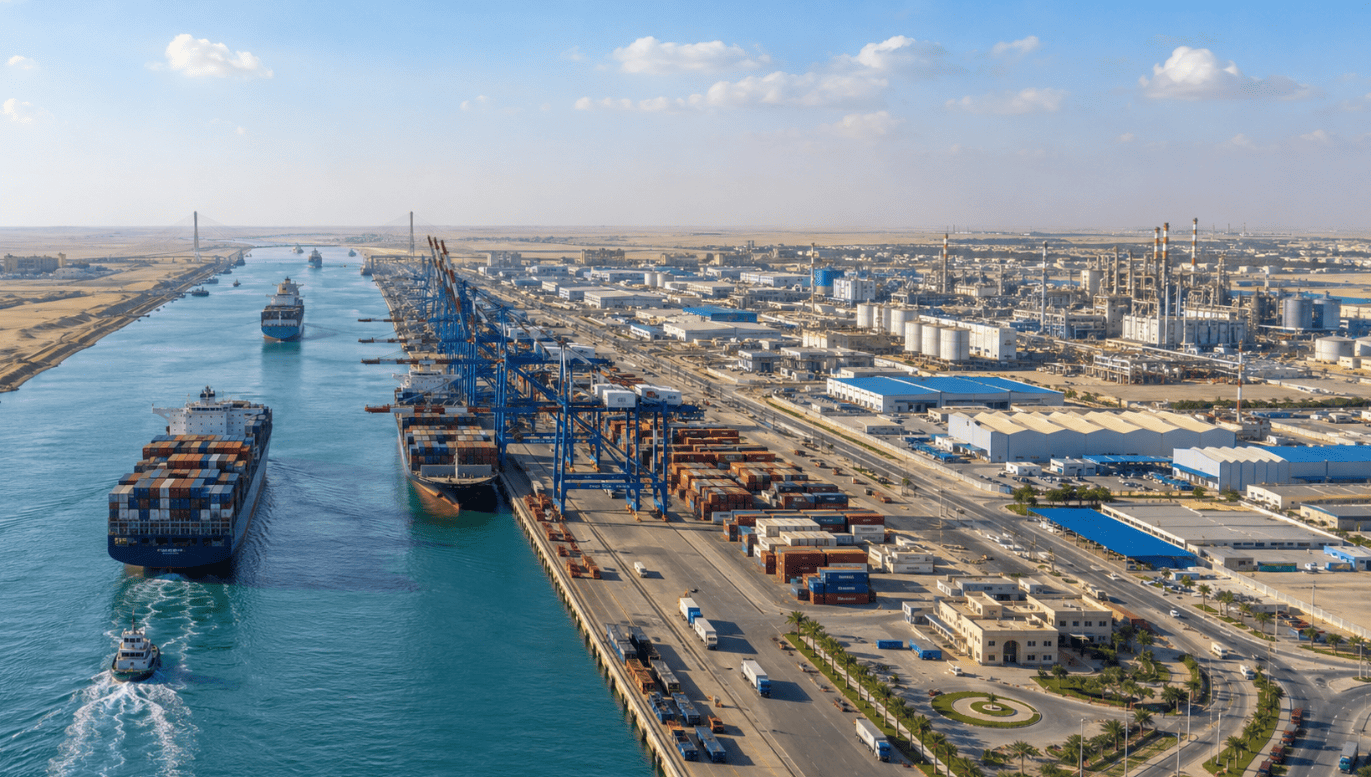
Egypt’s Suez Canal Economic Zone has reported its strongest annual financial performance since the authority was established, highlighting the growing importance of the area as an industrial, shipping and logistics centre.
Revenue reached EGP 15.9 billion during the 2025/2026 financial year, representing an increase of 37% compared with the previous year. The result was also 51% higher than the amount initially included in the authority’s budget.
Income received in foreign currency played an important role in the improvement. Dollar-denominated revenue rose to approximately $246 million and accounted for 76% of the authority’s total income. Revenue collected in Egyptian pounds increased to EGP 3.8 billion.
The figures were presented during the first meeting of the SCZone board for the 2026/2027 financial year.
Industrial Activities Reduce Dependence on Port Revenue
The latest results indicate that the economic zone is gradually diversifying its sources of income.
Ports continue to generate most of the authority’s revenue, but their contribution has declined from a previous average of 92% to around 81%. At the same time, industrial zones and other non-port activities now represent approximately 19% of total revenue, compared with only 8% in earlier years.
This shift reflects Egypt’s efforts to attract manufacturers and develop the area around the Suez Canal into more than a maritime transit route.
During the past financial year, the authority signed agreements for 117 new projects in its industrial zones. The projects represent planned investment of around $7.26 billion and are expected to provide approximately 73,500 direct employment opportunities once fully implemented.
Cargo activity has also grown significantly. The volume handled by SCZone ports increased from 51.2 million tonnes in the 2016/2017 financial year to 108.7 million tonnes in 2025/2026.
Expansion of terminals, longer berths and cooperation with international port operators have helped increase capacity and improve operating efficiency.
The new results strengthen the SCZone’s position within Egypt’s economic development plans. Future growth is expected to be supported by new factories, higher port activity and investment in sectors such as renewable energy, pharmaceuticals, chemicals, metals and electric vehicles.