Egyptian archaeologists have presented a significant collection of artifacts uncovered during excavations in Beni Suef and Cairo. The discoveries range from Pharaonic funerary objects to remains from the Greek and Roman periods, offering fresh evidence of the country’s long and culturally diverse history.
Among the most notable finds are a marble sculpture of Aphrodite, architectural remains of a Roman-era basilica, inscriptions connected to a powerful Middle Kingdom pharaoh and an almost complete group of burial objects discovered in the Egyptian capital.
Marble Head of Aphrodite Found in Beni Suef
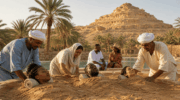
One of the most striking objects was recovered from the Ehnasiya archaeological site in Beni Suef, around 130 kilometres south of Cairo. The area was known in the Roman period as Heracleopolis Magna and once served as an important urban centre.
The marble head is believed to represent Aphrodite, the Greek goddess associated with beauty and love. Measuring approximately 24 by 25 centimetres, the sculpture preserves carefully shaped facial features and curly hair. Its design reflects artistic traditions that were common during the Greek and Roman periods in Egypt.
The excavation also revealed remains of a Roman basilica. Archaeologists found enormous stone blocks that once supported the building’s columns. Some of the blocks weigh as much as 45 tonnes, and three were reportedly discovered still standing in their original locations.
These architectural elements may help researchers better understand the scale and design of public buildings that existed in the ancient city.
Evidence of Pharaonic and Roman History at the Same Site
The discoveries at Ehnasiya were not limited to the Roman era. Archaeologists also uncovered inscriptions associated with Pharaoh Senusret III, one of the best-known rulers of Egypt’s 12th Dynasty.
Senusret III ruled during the Middle Kingdom, between approximately 1837 and 1819 BC. The newly discovered inscriptions include references to his royal throne name and birth name.
Finding Pharaonic and Roman objects in the same archaeological area highlights the long history of settlement at Ehnasiya. The city remained important for centuries as political control, religious traditions and artistic styles changed.
Researchers also discovered fragments of wall sculptures and terracotta moulds. The moulds may have been connected to coin production during the Roman period. Archaeologists believe this evidence supports the idea that the city was an active centre of commerce and manufacturing when Egypt formed part of the Roman Empire.
Funerary Objects Uncovered in Ancient Heliopolis
A separate excavation in Cairo’s Matariya district produced another important collection of artifacts. The neighbourhood lies within the territory of ancient Heliopolis, one of Egypt’s major religious and cultural centres.
Archaeologists found a mud-brick burial containing a coffin and gilded human remains. Early assessments suggest that the grave may have belonged to a military official, although further study may be needed to confirm the person’s identity and social position.
The burial also contained personal and cosmetic objects, including a copper mirror and alabaster containers that were likely used to hold kohl. Such objects can provide researchers with information about personal appearance, burial traditions and daily life in ancient Egypt.
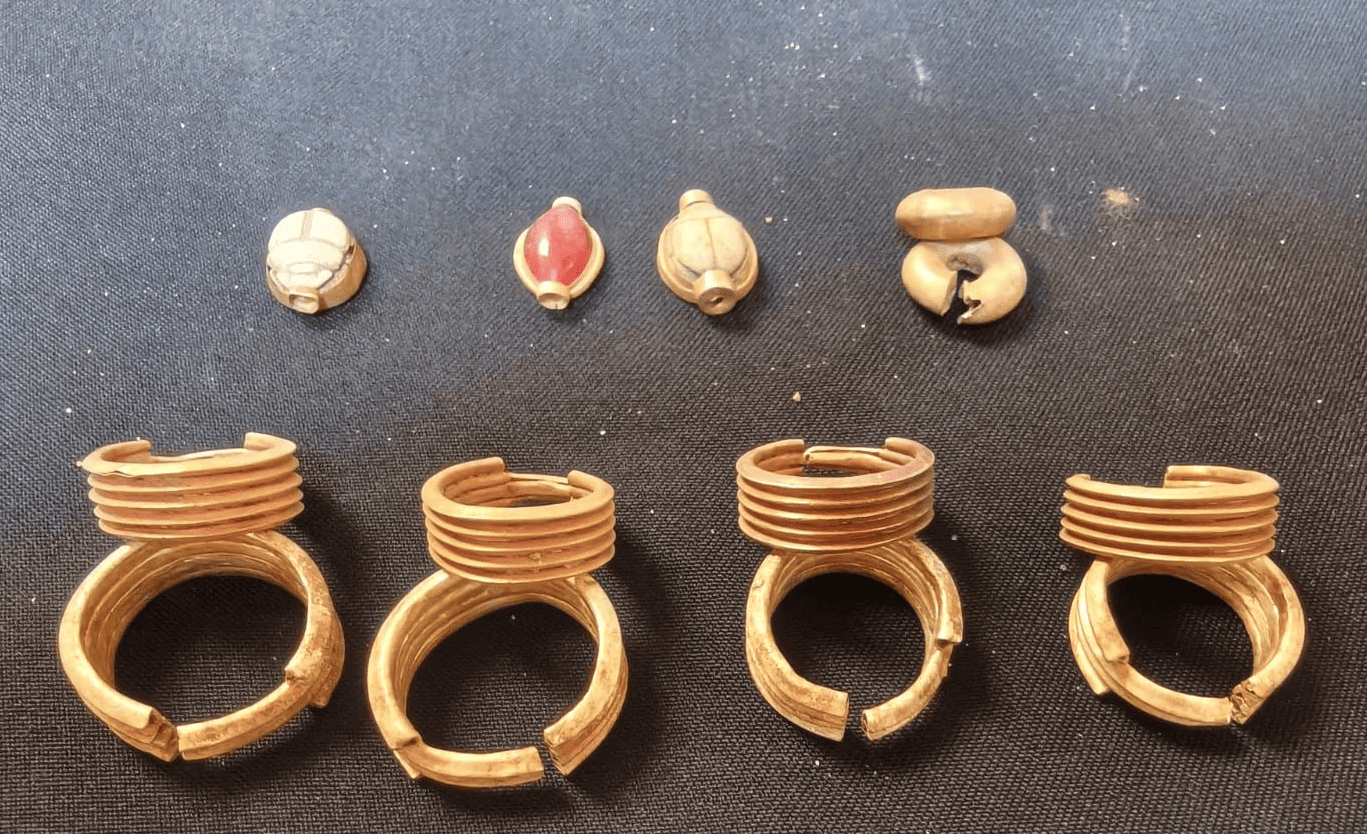
Five pairs of yellow-metal earrings in different sizes were also recovered. Archaeologists believe the jewellery may be made of gold.
Archaeology Remains Central to Egypt’s Tourism Strategy
Egyptian authorities hope that discoveries of this kind will attract more international visitors and strengthen the country’s tourism industry. Historical monuments, ancient burial sites and museum collections remain among Egypt’s most important attractions.
The country has also invested heavily in the Grand Egyptian Museum near the Giza pyramids and the Sphinx. The museum is expected to play a major role in presenting Egypt’s archaeological heritage to a global audience.
According to official figures cited in the original report, Egypt received about 19 million tourists in 2025, representing an increase of 21 percent compared with the previous year. During the first four months of 2026, approximately 6.1 million visitors travelled to the country, up from 5.7 million during the same period in 2025.
The latest findings demonstrate that Egypt’s archaeological landscape continues to produce valuable discoveries. From Pharaonic inscriptions and burial objects to Roman architecture and Greek-inspired sculpture, the artifacts reveal how different cultures shaped the country over thousands of years.