Egypt is preparing to establish ten Egyptian-German applied technology schools as part of a broader effort to connect technical education with the needs of employers.
The Ministry of Education and Technical Education signed a cooperation protocol with the Sawiris Foundation for Social Development to create and operate the new institutions.
A separate declaration of intent was signed with the German government to support the development of Egyptian-German technical schools and introduce training practices based on international standards.
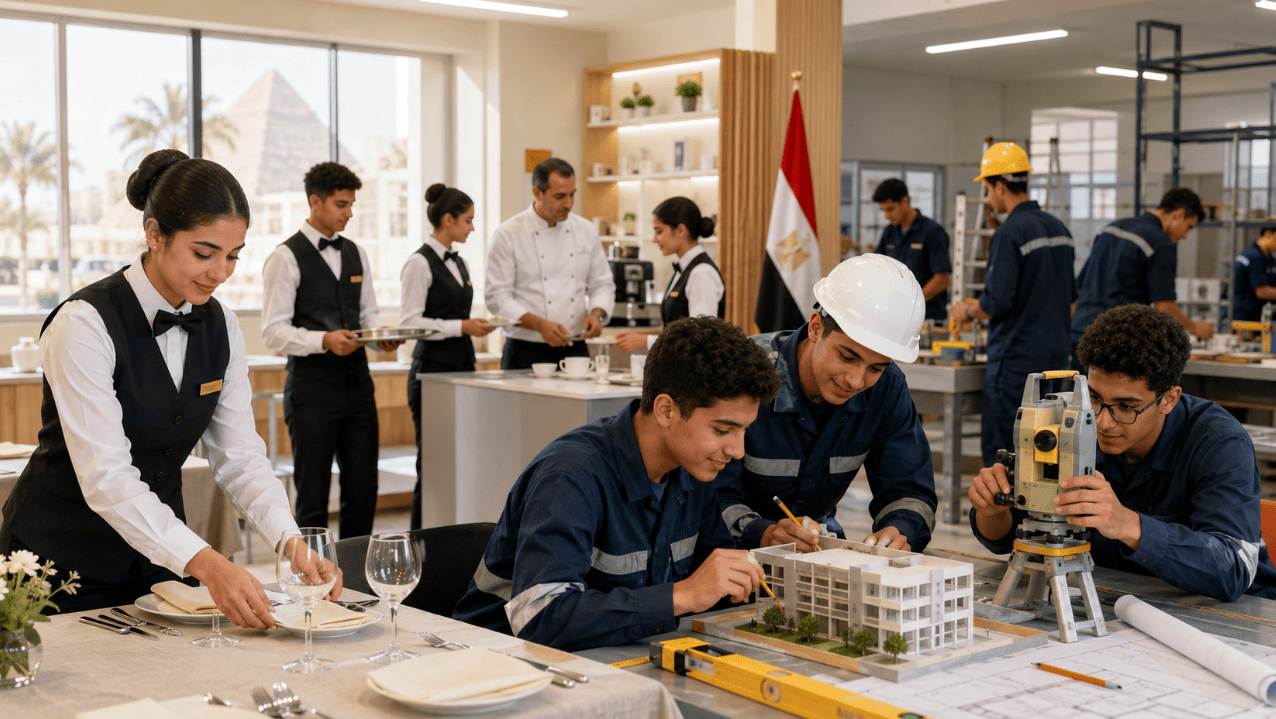
The ten schools are expected to specialise initially in hospitality and construction, two sectors that require large numbers of trained workers in Egypt and other international markets.
The agreements were signed in Berlin by Egyptian Minister of Education and Technical Education Mohamed Abdellatif, Sawiris Foundation Executive Director Laila Hosny and German development officials.
The project forms part of Egypt’s wider attempt to improve the reputation and employment outcomes of vocational education.
Students Will Combine Academic Lessons with Workplace Training
The proposed schools will use an applied learning model that combines classroom study with practical training.
Instead of concentrating mainly on theoretical examinations, students will develop specific professional competencies and gain experience using equipment and methods found in real workplaces.
The programmes are expected to include cooperation with hotels, construction businesses and other private-sector employers. This should allow curricula to be adjusted when technology, industry standards or recruitment requirements change.
Specialisations may be introduced, modified or removed by agreement between the participating organisations. The approach is intended to prevent courses from becoming outdated or disconnected from available jobs.
Students who complete the required academic and practical components will receive a diploma approved by Egypt’s Ministry of Education and Technical Education. They may also receive certificates demonstrating professional experience or specialised skills.
The Egyptian government will provide buildings, staff and necessary equipment for the schools. Germany is expected to contribute through curriculum development, teacher training, institutional capacity building and support for private-sector participation.
Modern workshops and training facilities will be developed according to industrial requirements.
The schools will also introduce technical German language courses. Depending on the programme and year of study, language instruction is expected to cover levels from A1 to B1.
German language skills may help graduates communicate with international companies and could create employment or further-training opportunities in Germany.
The wider Egyptian-German framework also includes work-based learning, dual education and stronger quality-control systems. Institutions that satisfy the required international and ISO-compatible standards may receive formal Egyptian-German status.
Officials will also examine the possibility of dual certification. Such a system could allow qualifications to be recognised by more than one institution or country, although the final arrangements will depend on accreditation procedures.
Annual progress is expected to be reviewed with the participation of Egypt’s Technical Education Reform Office.
The Ministry of Education will remain responsible for student assessment, examinations, official results and the issuing of diplomas. Both sides will also seek accreditation for the schools and their individual programmes.
The initiative comes as Egypt looks for ways to reduce the gap between education and employment. Many companies report difficulty finding workers with the practical skills required for modern equipment, customer service and specialised technical roles.
At the same time, graduates of traditional vocational schools may struggle to find stable work when their training does not match current industry requirements.
Applied technology schools are designed to address both problems by involving employers directly in education.
Hospitality training could support hotels, resorts, restaurants and tourism businesses. Construction programmes could prepare students for work involving modern building systems, maintenance, safety standards and specialised equipment.
The Sawiris Foundation’s participation is expected to strengthen the project’s connection with the private sector and provide additional support for school management and training.
The agreements do not mean that all ten schools are already operating. The next stages will involve selecting locations, preparing buildings, developing programmes, training teachers and establishing partnerships with employers.
Once launched, the schools could become a model for expanding internationally supported vocational education to additional regions and industries.
Egyptian and German officials say the long-term objective is not only to issue certificates, but to prepare graduates who can move directly into skilled employment.
By combining practical experience, foreign-language instruction and internationally aligned standards, the programme aims to give technical education a stronger role in Egypt’s economic development.