Plastic recyclers in Cairo are experiencing an unexpected increase in orders as regional shipping problems make imported raw materials more expensive and difficult for Egyptian manufacturers to obtain.
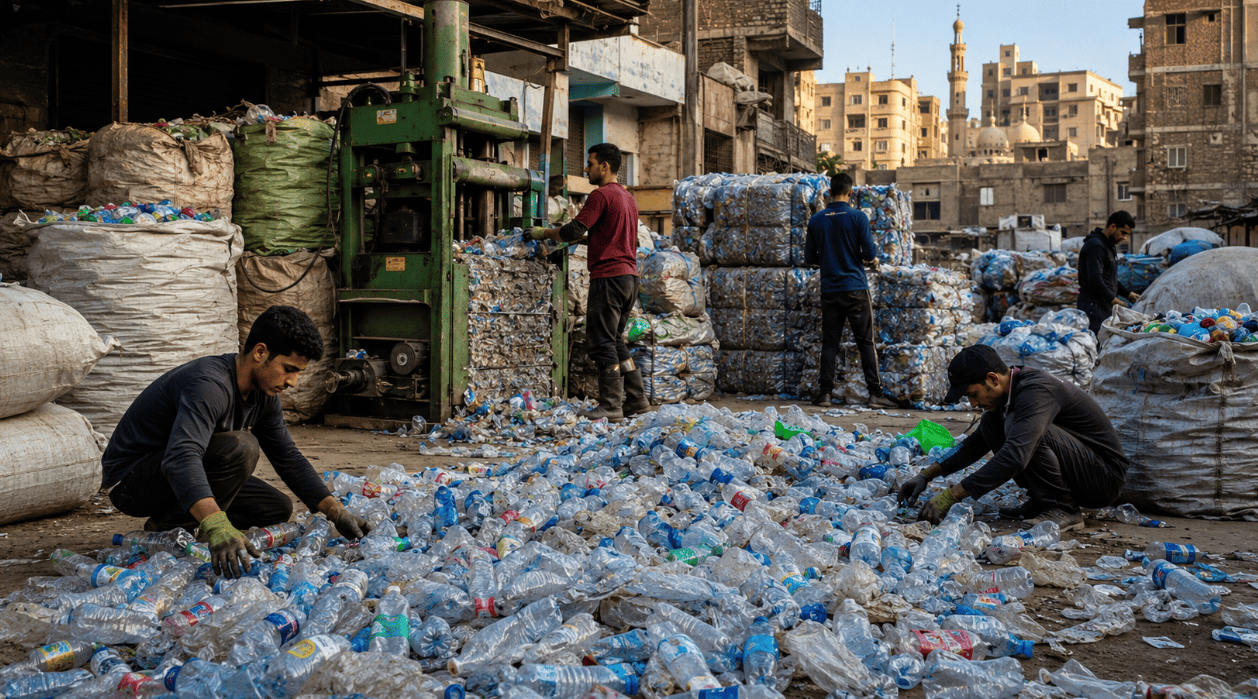
The change has been especially noticeable in Manshiyet Nasser, a densely populated area in eastern Cairo known for its extensive informal waste collection and recycling industry.
For years, local recycling businesses often had to contact factories directly and persuade them to purchase recycled plastic. Now, some manufacturers are approaching recyclers themselves, looking for material that can be delivered quickly.
The shift follows disruptions affecting the Strait of Hormuz, one of the world’s most important maritime routes for energy products and industrial raw materials. The Middle East is a major producer of polyethylene, while a large share of regional exports normally passes through the strait.
Egyptian companies import around 40% of the raw plastic materials they use, according to industry data cited in the original report. Suppliers include Gulf countries, Europe, China and South Korea.
When imported materials became less accessible, local factories began searching for alternatives closer to home.
Recycled Plastic Becomes a More Valuable Local Resource
Manshiyet Nasser is home to more than 115,000 residents and handles over one-third of Cairo’s waste. Generations of families have developed a complex system for collecting, sorting and processing discarded materials.
Plastic, paper, cardboard, glass and metal are separated before being sold to workshops and manufacturers. Much of this work takes place in or close to residential buildings, creating a recycling network that operates on a scale rarely seen in other cities.
The recent supply shortage has increased the commercial value of that network.
Some recyclers reported that demand for particular materials had tripled. Prices for certain categories of recycled plastic increased by as much as 60%, while factories that previously delayed payments began offering money in advance to secure supplies.
Companies that turn used bottles and packaging into new industrial materials have also benefited.
One Egyptian factory producing polyester fibre from discarded plastic bottles said the crisis had helped it enter new export markets. Another company specialising in recycled packaging materials recorded an increase of up to 40% in demand, particularly from food and beverage manufacturers.
For producers, recycled plastic offers a material that may be available more quickly than imported alternatives. It can also reduce dependence on international supply chains at a time of regional uncertainty.
However, the financial benefits do not remove the difficult working conditions faced by many recycling families. Residents may live close to piles of waste, shredding equipment and plastic-processing operations, exposing them to smoke, unpleasant odours and other health risks.
The current boom may also be temporary. Demand could decline once shipping routes stabilise and imported raw materials become easier to obtain.
Even so, the situation has demonstrated the economic importance of Cairo’s informal recycling sector. A system that has often operated with limited recognition is now helping Egyptian factories respond to an international supply shock.
The development may encourage greater investment in safer recycling facilities, modern equipment and formal employment. It also shows how locally recovered materials can play a larger role in Egypt’s manufacturing economy when global supply chains are interrupted.