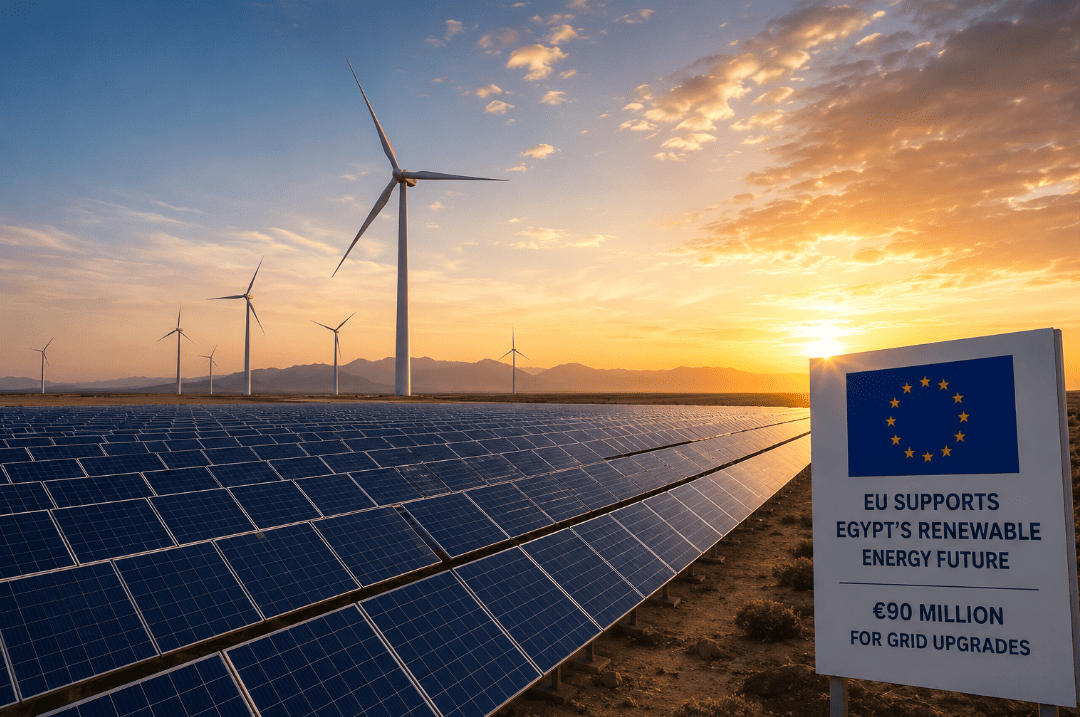
The European Union is preparing to support Egypt’s energy transition with a €90 million grant aimed at upgrading the country’s electricity grid and expanding its capacity to handle more renewable power.
The planned funding comes as Egypt continues to position itself as a regional energy hub, with growing focus on solar, wind, green hydrogen and other low-carbon projects. The agreement is expected to be finalized in the coming weeks, while the grant itself will be distributed over a period of three to four years.
Grid Modernization Becomes Central to Egypt’s Renewable Energy Strategy
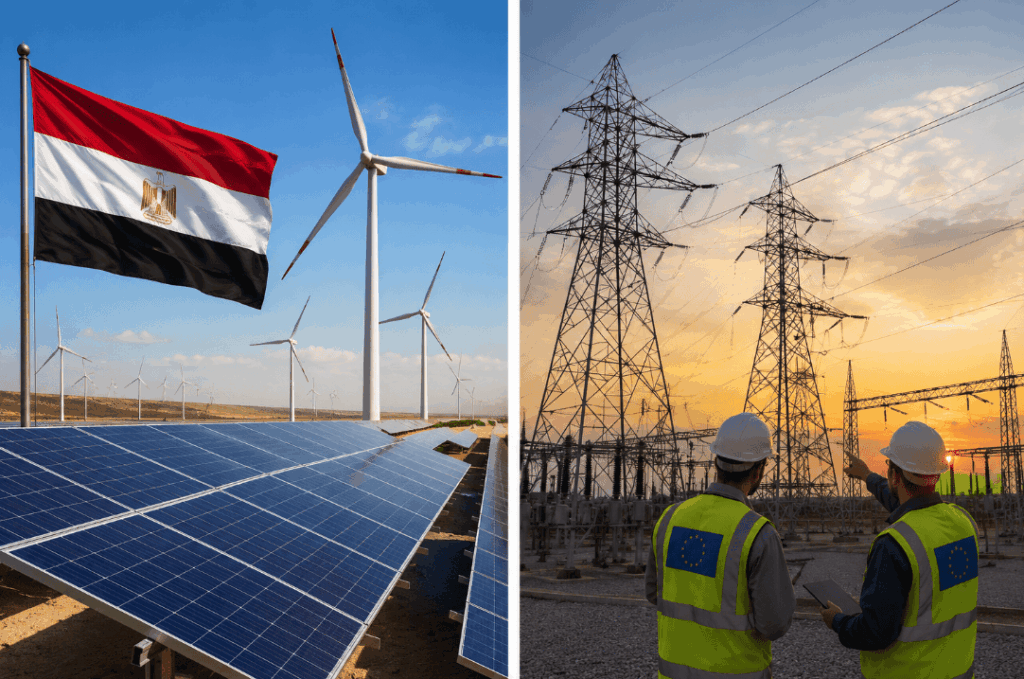
The new EU-backed program will focus on improving Egypt’s transmission infrastructure, increasing grid efficiency and reducing technical limitations that could slow the integration of renewable energy.
As solar and wind projects expand, particularly in areas such as the Gulf of Suez and Upper Egypt, Egypt needs stronger networks capable of transporting electricity from production zones to major consumption centers. Without additional grid capacity, new renewable projects may not be able to deliver their full economic and operational benefits.
The EU is also supporting studies for eight electricity distribution control centers across Egypt. These facilities are expected to improve the management of power flows and help the national grid operate more efficiently as the share of renewable energy increases.
European Financing Expands Beyond Electricity Transmission
The €90 million grant is part of a broader European effort to support Egypt’s clean energy sector. The European Investment Bank has already signed a €600 million loan to help expand the country’s electricity transmission network.
Additional European support is also being considered for green industry projects. In 2026, the EU is expected to provide €35 million to Norwegian renewable energy company Scatec for a green ammonia project in Egypt. This reflects Europe’s growing interest in Egypt’s potential role in future fuel supply chains, including green hydrogen and its derivatives.
The EU is also discussing investment guarantees for UAE-based Alcazar Energy to encourage private sector participation in Egypt’s electricity and renewable energy projects. Instead of relying only on sovereign guarantees, the proposed structure would offer direct protection to investors, helping reduce risk and attract more foreign capital.
In 2025, the EU supported several major energy infrastructure projects in Egypt, including funding for the Alexandria electricity transmission control center and transmission line expansion connected to renewable power from the Gulf of Suez.
Through these initiatives, the EU aims to help Egypt raise the share of renewable energy in its electricity mix. Egypt is targeting around 22 gigawatts of renewable capacity by 2030, while the longer-term goal supported by European partners is to increase renewables to 65% of total electricity generation by 2040.
The latest grant underlines that Egypt’s clean energy ambitions will depend not only on building new solar and wind projects, but also on creating a smarter, stronger and more flexible electricity network capable of supporting them.