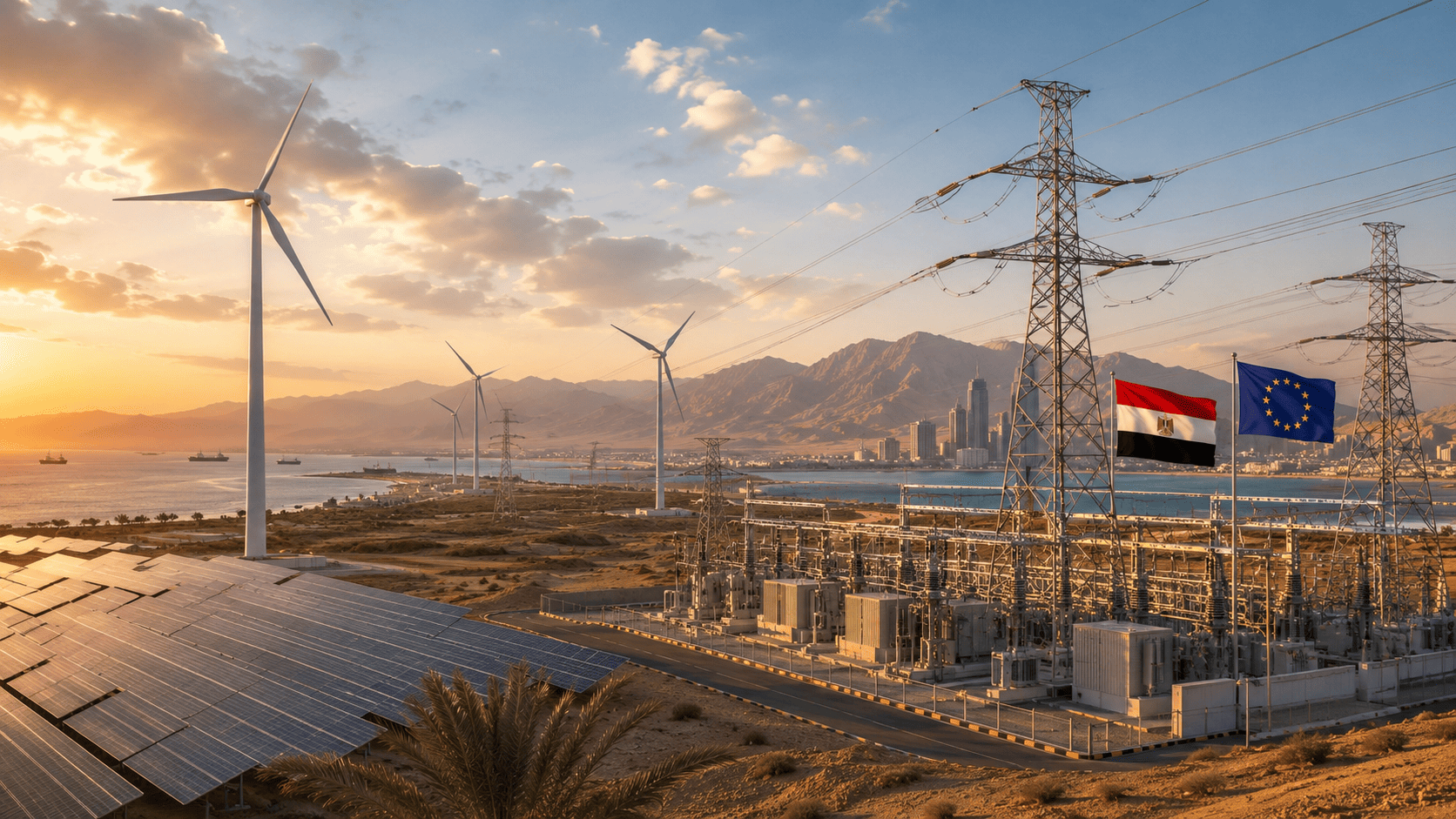
Egypt and the European Union have announced a major clean energy investment package worth up to €690 million, aimed at upgrading Egypt’s electricity grid and accelerating the country’s shift toward renewable energy.
The package includes a €600 million loan from EIB Global, the development arm of the European Investment Bank, along with up to €90 million in grants from the European Commission. The programme will be led by the state-owned Egyptian Electricity Transmission Company.
The goal is ambitious: Egypt plans to connect up to 22 gigawatts of renewable energy capacity to the national grid by 2030. According to the EU, this amount of clean power could supply around 10 million households with electricity.
The project will focus on modernising Egypt’s transmission network, including new substations and advanced power lines. A key part of the work will support solar and wind energy generated in the Red Sea and Gulf of Suez regions, helping move clean electricity into the national system more efficiently.
For Egypt, the deal is more than an infrastructure project. It supports the country’s plan to expand renewable energy, reduce pressure on the power network, improve electricity reliability, and strengthen its position as a regional energy hub between Africa, the Middle East, and Europe.
The investment is also expected to reduce transmission losses and improve energy security at a time when demand for electricity continues to grow. The EIB-supported phase is planned for 2027–2030, making the project one of Egypt’s most important clean energy upgrades for the end of the decade.
The new package shows that Egypt’s green energy strategy is moving from promises to large-scale infrastructure. If delivered on schedule, the upgraded grid could become a key foundation for the country’s renewable energy future.